
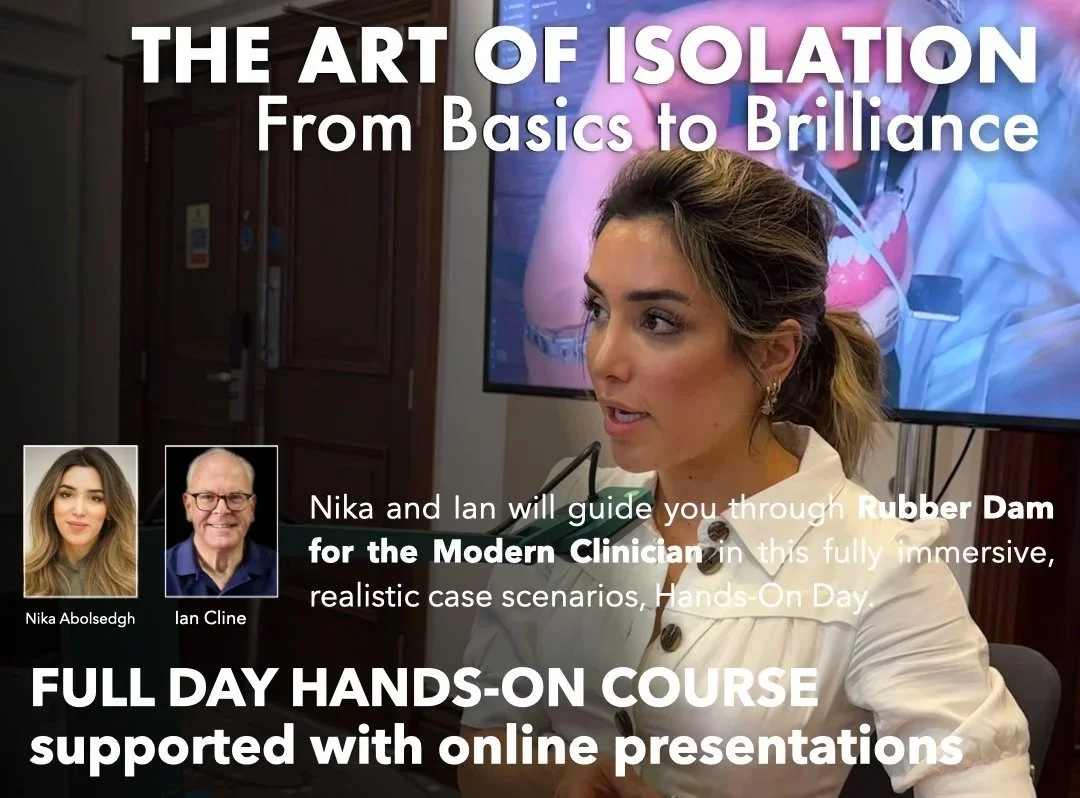
 Image 1 of 1
This course is for you if…
You learnt rubber dam at dental school but rarely use it in practice because it feels too slow
You use it for endo but avoid it for restorative work
You're moving toward adhesive dentistry — composites, onlays, veneers — and know your isolation isn't where it needs to be
Your nurse rolls their eyes when you reach for the dam, and your patients ask what on earth you're doing
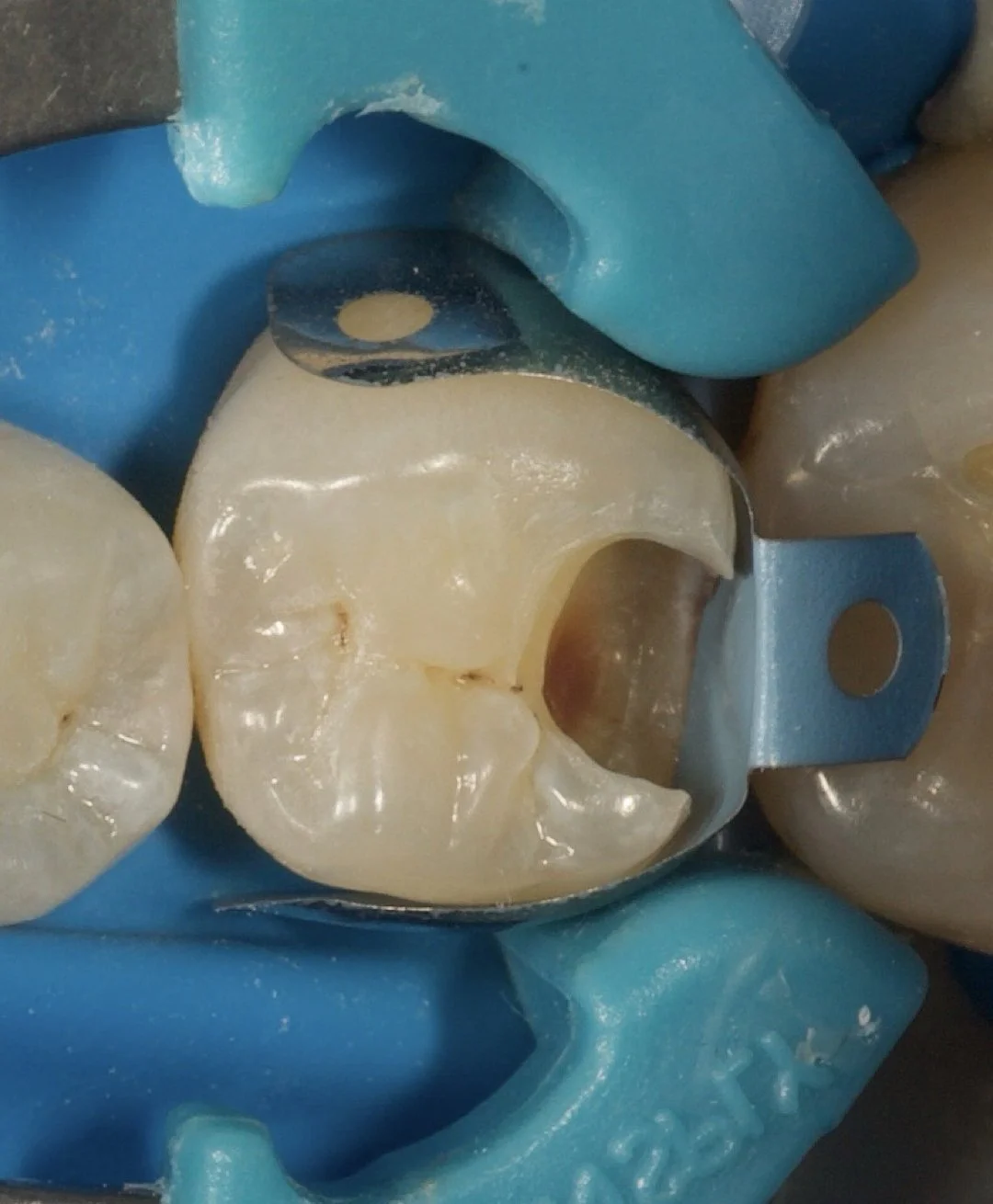
You want a single, repeatable protocol that works for routine restorative, endo, indirect cementation, and the awkward cases (last molar, deep margins, anteriors)
It's probably not for you if…
You're already comfortable placing a dam in five minutes for any tooth and want advanced micro-techniques only
You don't intend to move toward adhesive restorative work
What you'll be able to do after this course
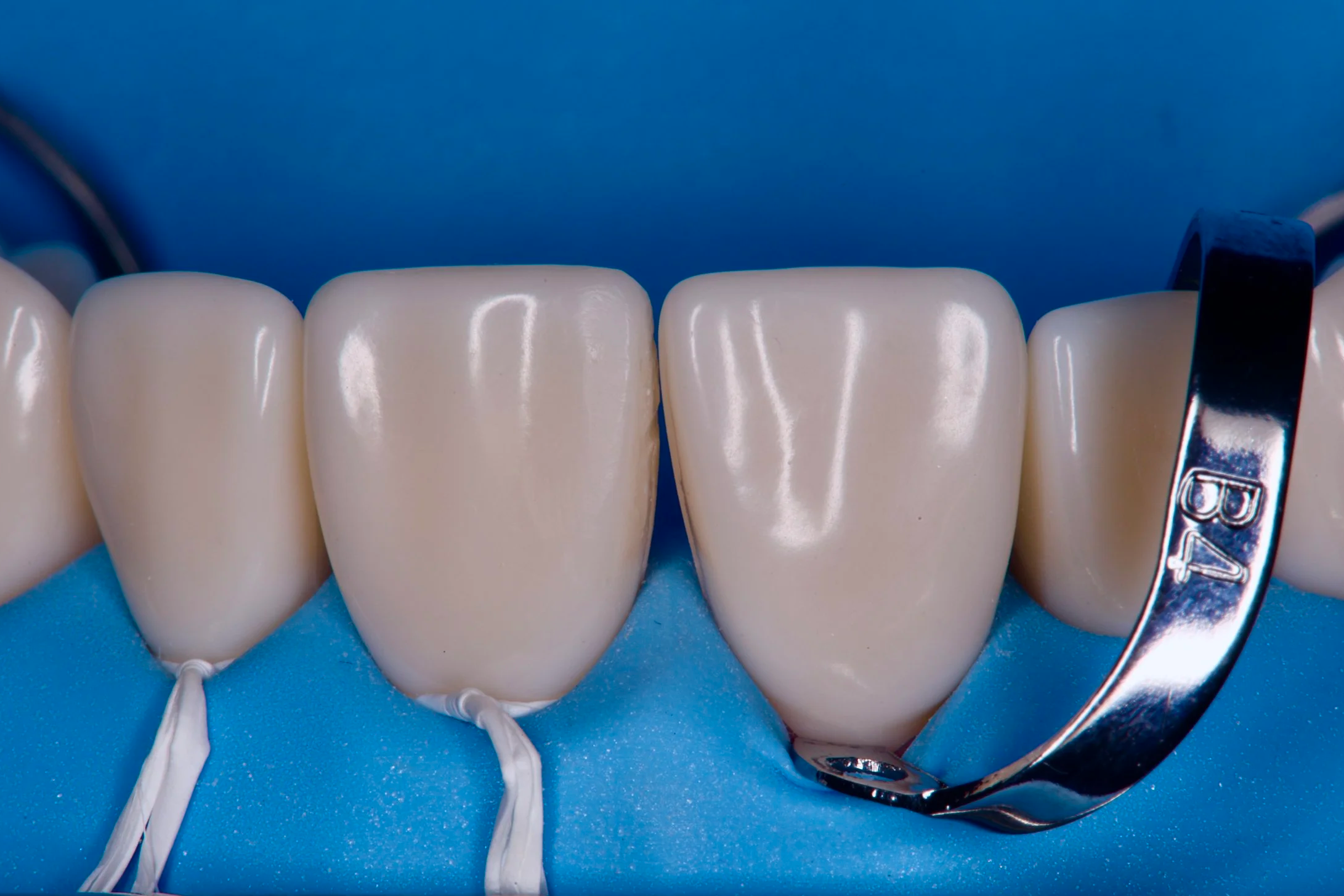
Place a dam in under five minutes for routine quadrant restorative work
Choose the right clamp every time — and stop reaching for the same three you've always used
Isolate the awkward cases — last standing molar, anterior aesthetics, deep subgingival margins
Cement onlays and veneers under absolute isolation with predictable adhesion
Scan intraorally with the dam in place to keep your digital workflow moving
Train your nurse in a four-handed protocol that makes placement faster, not slower
Talk to patients about the dam in a way that increases acceptance rather than resistance
Why most dentists don't use rubber dam — and why that's the problem
The reality in most practices is that rubber dam isn't used routinely. Not because dentists don't believe in it — every dentist knows the evidence. It's because placing a dam takes too long, the nurse gets frustrated at the "wasted" time, and the patient loses faith before treatment has even started.
So the dam stays in the drawer. Cotton wool rolls come out. The composite goes onto a substrate that isn't quite dry. And six months later, the margin stains, the patient comes back, and you're not sure why.
Modern dentistry is adhesive dentistry. Adhesive dentistry needs a clean, dry, contamination-free field. There is no shortcut around this — and the medicolegal direction of travel in the UK is increasingly clear: rubber dam is the standard of care for adhesive and endodontic procedures.
The good news is that placing a dam fast is a system, not a talent. Done correctly, routine quadrant isolation takes under five minutes. Done correctly, your nurse will prefer it. Done correctly, your patient will too — once they're numb, most patients find the dam more comfortable than working without it.
That's what this day is built to deliver.

Dr Nika Abolseldgh | Course Instructor
Nika attained her Doctor of Dental Medicine with honours in 2014, and thereafter completed her Master’s in Restorative Dental Practice with Distinction at the Eastman Dental Institute, UCL.
From creating beautiful bespoke smiles, to salvaging heavily restored and worn dentitions. She has a keen interest in biomimetic dentistry, which is the preservation of intact tooth structure whilst replicating nature as closely as possible.Her open and calm persona has made her exceptionally popular with patients, particularly those who suffer from dental phobias.
Place a rubber dam in under five minutes — for any tooth, on any patient, every time.
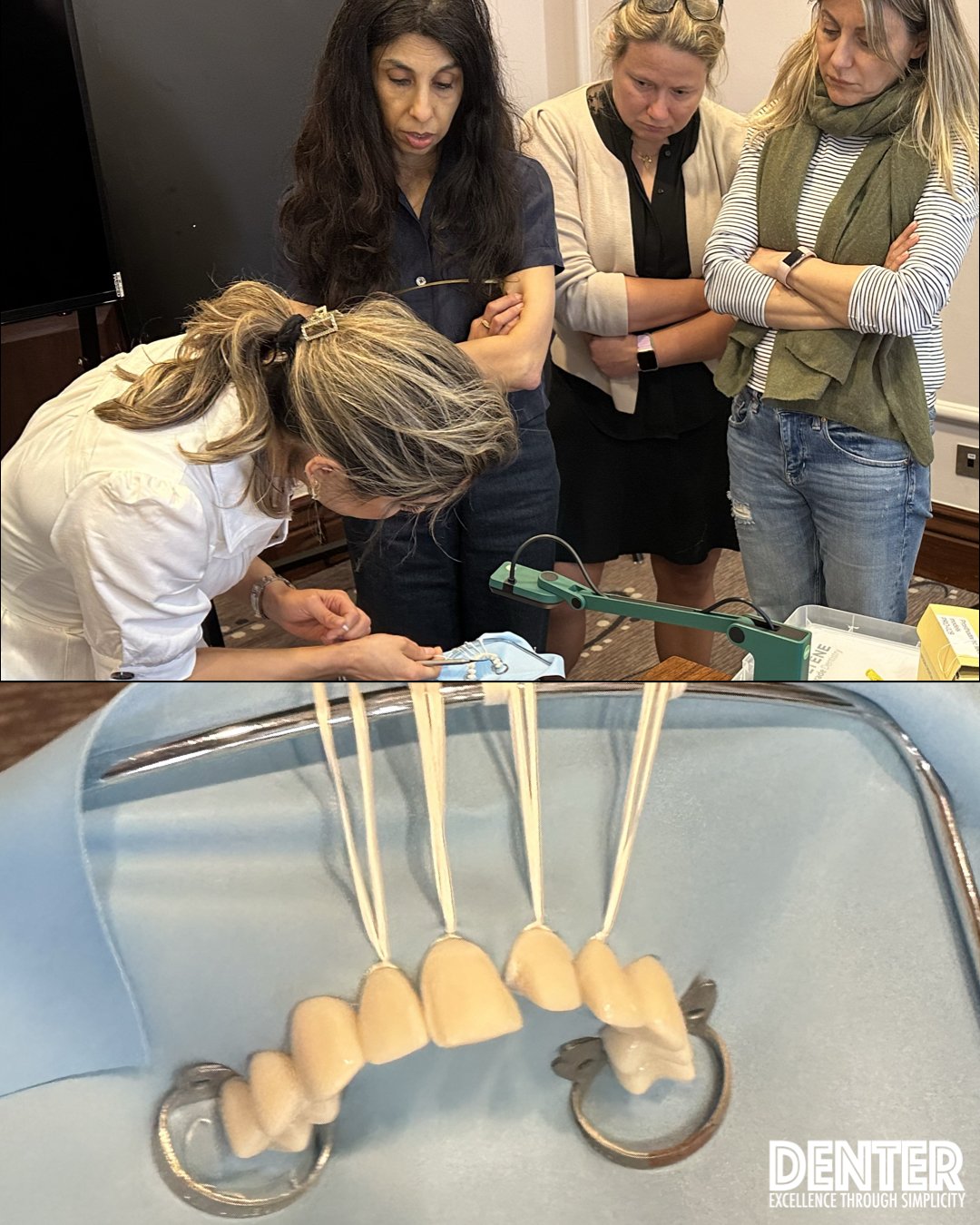
One-day hands-on course
Blended learning with online pre-course training
8 verifiable ECPD hours
Limited to 16 dentists
Blended learning — you'll arrive prepared
This isn't a day where you spend the morning catching up. Around three hours of pre-course online training (theory, fundamentals, kit walkthroughs) is delivered through DENTER's dedicated learning portal, so the hands-on day is spent doing — not listening.
You'll keep portal access, including all PDFs, manuals and references, for three years after the course.
Excellent Course, so many practical details. Good presentations, great support, super location too. Thanks so much.
Dr Albert Varga
Brilliant Course. Amazing Speakers.
Dentist from May 2025 Course
Nika’s technique is highly effective, it was simple & stress free to follow. I really enjoyed the day. The Best Rubber Dam Isolation Course! Thank you
Dentist from the June 2024 Course

VENUE
Thistle London Holborn, Bloomsbury Way, London WC1A 2SD
TIMINGS
Arrive from 9.00am for Coffee & Pastries
Prompt Start 9.30am
Lunch 1-2pm
Finish approx. 5.00pm
FAQs
My nurse and I are slow at placing dam. Is this course too advanced?
1
No — this is exactly who the course is built for. Most delegates arrive placing dam slowly (or not at all). The whole point of the day is to give you a repeatable protocol that you can use on Monday morning.
Can my nurse come too?
2
This course is designed for dentists, but if you'd like to bring your nurse, get in touch — we can usually accommodate one nurse per delegate at a reduced rate, and four-handed practice is a major part of the day.
Do you cover endodontic isolation?
3
Yes — endo isolation, single-tooth isolation, and the techniques for isolating the last standing molar are all covered. The course is built around restorative and endodontic use.
Will this help with my medicolegal exposure?
4
Yes. Rubber dam use is increasingly regarded as the standard of care for adhesive and endodontic procedures in the UK. Routine, documented use of isolation is a meaningful part of defensible practice.
Place a rubber dam in under five minutes — for any tooth, on any patient, every time.
One-day hands-on course
Blended learning with online pre-course training
8 verifiable ECPD hours
Limited to 16 dentists